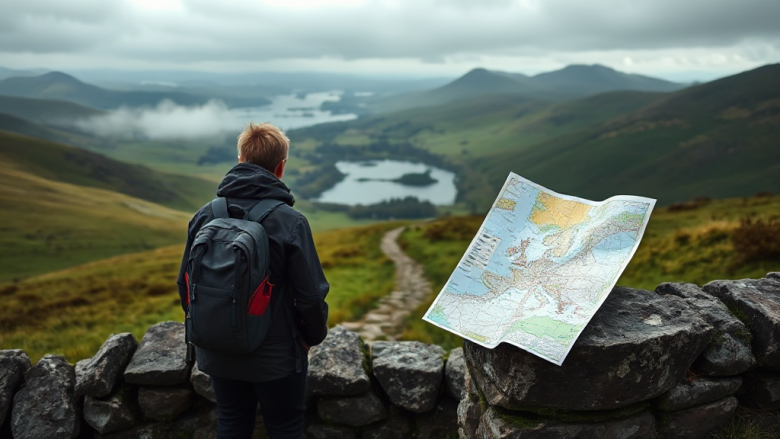
Fifteen national parks. That’s the number that hits you when you first start searching. Fifteen, spread across England, Scotland, and Wales, each with its own weather, its own transport headaches, and its own version of what “a walk” means. The photos make it look simple: a ridge line at golden hour, a pub with a fire, boots by the door. The planning is less photogenic.
This complete guide to national park visits in the UK walks through the decisions in the order you’ll actually face them. Which park, which season, how to get there, where to sleep, what to carry, and how to behave so the place is still worth visiting in ten years. If you’re coming from a city and this is your first multi-day trip, start at the top and work down.
Choosing the Right Park for Your Season and Interests
Most first-timers pick a park because of one image. That’s fine as a starting point, but the image rarely tells you what the place is like in the month you can actually travel.
Think about what you want the trip to feel like. If you want big, exposed mountain days, look at the Scottish Highlands or the Lake District. If you want gentle valley walking, stone villages, and a pub every few miles, the Peak District, the Yorkshire Dales, and the Cotswolds deliver that without demanding navigation skills. If you want coastline, Dartmoor and Exmoor give you moorland and sea within the same day, while Pembrokeshire and Snowdonia offer cliffs and estuaries alongside serious hills. If wildlife is the draw, the Broads and the New Forest reward slow, quiet movement more than distance covered.
Season changes everything. Summer gives you long daylight, which matters more than most people expect, because a wrong turn at 4pm in December is a different problem than a wrong turn at 4pm in July. Winter gives you empty car parks, low light, and a real risk of ice on high ground. Spring and autumn are the sweet spots for most parks: fewer people, softer ground, and accommodation that isn’t booked solid.
One practical rule: match your ambition to the shortest day of your trip, not the longest. If you’re visiting in late October, plan a six-hour walking day, not a nine-hour one. You’ll enjoy it more and you won’t be navigating by phone torch.
Getting There and Finding Somewhere to Sleep
Transport is where most first trips go wrong, because UK national parks are not uniform. Some have railway stations inside them. Some have one bus a day. Some assume you have a car, and some actively discourage one.
The Lake District, the Peak District, Snowdonia, and the Yorkshire Dales all have reasonable rail access to gateway towns, with onward buses or local trains into the park. The Scottish parks are different: Cairngorms has stations at Aviemore and Kingussie, but the Loch Lomond and Trossachs area is patchier, and the Northumberland park is genuinely car-dependent for most of its interior. If you don’t drive, choose your park around the public transport, not the other way round.
If you do drive, the parking situation is the thing to research before you go. Popular trailheads fill by mid-morning in summer, and many car parks are small, pay-and-display, and without phone signal. Carry coins or a card that works offline, and have a second-choice start point in mind.
Accommodation books out fast for weekends and school holidays, often months ahead. Three options work well for first-timers. A gateway town gives you shops, restaurants, and a bus, but you’ll drive or ride to the trailhead. A bunkhouse or hostel inside the park puts you close to the walking but limits your evening options. A campsite is cheapest and most flexible, but UK weather punishes optimism, so check whether the site has a drying room and hardstanding pitches.
Book the accommodation before you book anything else. It’s the hardest constraint to work around, and it often determines which part of the park you’ll actually explore.
What to Pack and What to Book in Advance
The packing list for a UK national park is less about gear and more about layers. Weather here changes within a single afternoon, and a warm valley can turn into a cold, windy ridge in under an hour. Bring a waterproof shell, a warm mid-layer, and a spare pair of socks. Bring footwear you’ve already broken in. Bring a paper map and a compass if you’re going onto open ground, because phone batteries die and signal disappears.
Water and food matter more than people expect. Many parks have long stretches with no shop, no cafe, and no tap. Carry more water than feels necessary and food you can eat without cooking. A small first aid kit, a headtorch, and a whistle are cheap insurance.
Book ahead for anything with a fixed capacity. That includes popular campsites, hostel beds, guided walks, boat trips, and any activity involving a instructor or a permit. If you’re visiting a park with a park-and-ride or a shuttle bus, check whether it runs every day or only at weekends, and whether it stops in early autumn.
One thing you don’t need to book: most of the walking. The vast majority of paths in UK national parks are open access, free, and unmarked at the start. That freedom is the point, and it’s also the reason you need a map.
Visiting Responsibly Without Overthinking It
Responsible visiting in UK national parks comes down to a few habits that are easy once you know them. Stay on paths where they exist, especially on fragile ground like peat, limestone pavement, and dune systems. Close gates behind you, even if they were open when you arrived. Take all your litter home, including fruit peel and coffee cups, because “it’s biodegradable” still means it’s litter.
Wild camping is legal in some Scottish parks under certain conditions, and illegal in most of England and Wales without permission. Check the rules for the specific park before you assume. If you’re camping, use established sites where you can, and if you’re wild camping legally, pitch late, leave early, and keep groups small.
Dogs are welcome on many paths but not all, particularly during lambing and ground-nesting bird season in spring and early summer. Keep them on a lead around livestock and near cliffs, and clean up after them. It’s a small thing that keeps access open for everyone.
Lastly, respect the people who live and work in these places. Park in designated spots, don’t block farm gates, and treat the village shop as a place to buy something rather than a free toilet. Small courtesies add up across a season.
A Realistic Three-Day Rhythm for a First Trip
Three days is the shortest trip that feels like a holiday rather than a commute. Here’s a rhythm that works in almost any UK national park.
Day one is arrival and orientation. Travel in the morning, check in, then do a short, low-stakes walk near your base. Two to three hours, ideally a loop you can’t get lost on. Use it to test your boots, your layers, and your pace. Eat somewhere local and go to bed early.
Day two is the big day. Start early, because parking and weather both reward it. Pick one substantial route, whether that’s a summit, a valley traverse, or a coastal section, and give yourself a buffer. Aim to be off high ground well before dark. If the weather turns, have a lower-level alternative ready. This is the day you’ll remember, so don’t cram it with a second activity.
Day three is a slow morning and a gentle finish. A short walk, a visitor centre, a cafe, then the journey home. Trying to squeeze a full day of walking in before a long drive is how people end up miserable on a motorway at midnight.
That rhythm leaves room for the thing that makes national parks worth visiting: not ticking off a route, but noticing where you are.
Frequently Asked Questions
Do I need to book national park entry in advance?
No. UK national parks don’t charge entry and don’t require booking to visit. You may need to book parking, campsites, accommodation, or specific activities, but the park itself is open access.
Can I visit a UK national park without a car?
Yes, but choose carefully. The Lake District, Peak District, Snowdonia, and parts of the Yorkshire Dales work well by train and bus. More remote parks are much harder without a car, so plan your transport before you commit to a location.
What’s the best time of year for a first visit?
Late spring and early autumn suit most first-timers. You get reasonable daylight, manageable crowds, and softer weather than mid-winter, without the peak-season pressure on parking and accommodation.
Is wild camping allowed in UK national parks?
It depends on the park and the country. Some Scottish areas allow it under specific conditions. In most of England and Wales, you need the landowner’s permission. Always check the rules for the park you’re visiting.